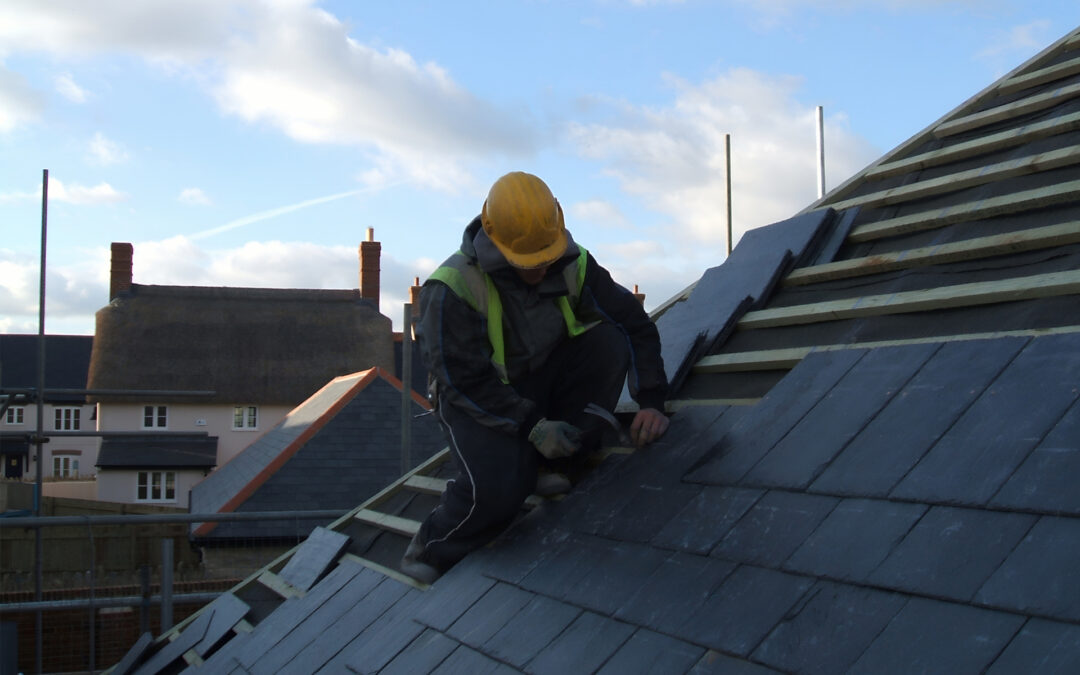
The Question Every Homeowner Asks (And Why The Answer Is Rarely A Single Number)
If you have ever stood in your garden squinting up at a slipped tile or a damp patch on the ceiling, your first thought was probably a simple one: what is this going to cost me? It is the question we are asked most often, and it is a perfectly fair one. Nobody wants to invite a roofer round without some idea of whether they are looking at a modest repair or a four-figure project.
The honest answer is that roof repair pricing is rarely as neat as a single figure per square foot. Roofs vary enormously in pitch, material, age, height and accessibility, and two houses on the same Sussex street can produce very different roofing quotes for what looks, from the ground, like the same problem. What we can do is explain how the numbers are built up, what the typical UK ranges look like, and which factors push a price up or down.
As a family-run roofing business with 25 years of experience across Sussex, we believe in a friendly, transparent approach. This guide is written in that spirit: no jargon, no scare tactics, just a clear look at roof repair prices so that when you compare quotes, you know exactly what you are reading.
How Much Does Roof Repair Cost Per Square Foot In The UK?
UK roofers traditionally price by the square metre rather than the square foot, which is worth remembering when you are comparing figures found online. One square metre is roughly 10.76 square feet, so converting between the two is straightforward once you know which unit a quote is using.
As a broad guide, full roof covering work in the UK commonly falls somewhere between £100 and £200 per square metre, which works out at roughly £9 to £19 per square foot depending on materials, access and complexity. Natural slate, heritage clay and complex cut roofs sit at the upper end, while straightforward concrete tile work on a simple gable roof tends to sit lower.
Smaller roof repairs, however, are seldom priced by area at all. Replacing a handful of slipped tiles, re-bedding a ridge or sealing a section of lead flashing is usually quoted as a fixed job price, because the cost is driven by labour, access and safe working time rather than square footage. That is why a tiny repair high up on a three-storey townhouse in Brighton can cost more than a larger repair on a bungalow in Worthing.
In practice, minor repairs such as replacing a few tiles or re-sealing flashing often land in the low hundreds of pounds. Moderate work involving a section of re-felting, valley repairs or chimney flashing renewal typically runs into the mid hundreds. Where there is rot in the battens, damaged decking or structural timber to address, costs climb further, and at that point a conversation about repair versus replacement becomes sensible.
Roof Size, Pitch And Complexity: The Three Biggest Cost Drivers
Roof size is the most obvious factor, but it is not simply the footprint of your house. A steeply pitched roof has considerably more surface area than the floor plan beneath it, which means more materials, more underlay, more battens and more labour hours. A shallow roof on a semi-detached property will almost always work out cheaper per square foot than a steep Victorian pitch of the same footprint.
Pitch also affects safety and speed. Working on a steep slope means slower, more careful progress and additional edge protection, and that time is reflected in the labour element of your roofing quote. Very shallow roofs bring their own issues, since they can be more prone to water sitting and wind-driven rain being pushed under the covering.
Complexity is the factor homeowners tend to underestimate. Valleys, hips, dormers, bay roofs, chimneys and abutments all require cutting, detailing and flashing work that plain runs of tiling simply do not. A simple gable roof might be covered quickly and cleanly, whereas a cut-and-mitred hip roof with two dormers and a chimney stack involves far more skilled hand work for the same square footage. You can see examples of this detailing in our project gallery, including the bay window roof with bird spikes in Hove.
How Roofing Materials Affect Roof Tile Repair Cost And Replacement Pricing
Materials are the second half of the equation, and the spread is wide. Concrete interlocking tiles are generally the most economical to repair and replace, which is why they are so common on post-war housing across Sussex. Clay plain tiles cost more per unit and take longer to lay because so many more are needed per square metre.
Natural slate sits at the premium end, both for the material itself and for the skill required to hang and dress it properly. Fibre cement slates offer a middle ground, giving a slate-like appearance at a lower material cost. Where a roof is listed or sits within a conservation area, as many properties in Arundel and Lewes do, like-for-like materials may be required, which naturally influences the budget.
Flat roofing follows its own pricing logic. Flat roof repair cost depends heavily on the existing system: patching a felt roof is relatively inexpensive, while a full EPDM rubber or GRP fibreglass overhaul costs more upfront but typically delivers a longer service life. We are not tied to any one product or roofing system, so we can give genuinely independent advice on whether a repair, an overlay or a full renewal represents better value for your property and budget. Our flat roof project in Hove and the felt roof and guttering work in Horsham show how different flat roof situations call for different solutions.
Access, Scaffolding And Safety: The Costs Behind The Scenes
One of the biggest surprises for homeowners is how much access arrangements contribute to roofing costs. Roof work is legally classed as working at height, and the Health and Safety Executive sets out clear expectations for how it should be planned and carried out in its guidance on health and safety in roof work. Proper scaffolding, edge protection and safe access are not optional extras, they are part of doing the job correctly.
For anything beyond a very minor repair, scaffolding is usually required, and that carries its own hire period, erection and dismantling costs. If the scaffold needs to stand on a public footpath or road, a licence from the local highway authority is also needed. West Sussex County Council, for example, publishes its requirements and charges for a scaffolding licence on the public highway, and similar arrangements apply elsewhere in the county.
Property-specific access issues matter too. Narrow terraced streets in Brighton and Hove, tight rear gardens, conservatories beneath the work area, overhead cables and limited parking all add time and planning. A detached house in Haywards Heath with open access on all four sides is simply quicker and cheaper to work on than a three-storey seafront property with no side access at all.
Hidden Damage, Emergency Call-Outs And Regional Labour Rates
Until tiles are lifted, nobody can be completely certain what lies beneath. Perished underlay, rotten battens, failed decking or damaged rafters are common discoveries on older roofs, and they change the scope of the work. A reputable roofer will tell you honestly if they find something, explain the options and confirm costs before carrying on, rather than quietly adding items to the final invoice.
Urgent work also carries a premium, and understandably so. After a storm, when water is actively coming into a property, the priority is making the building safe and watertight quickly. Our emergency roof work service is there for exactly those moments, and we handle insurance-related storm damage repairs across Sussex when high winds and driving rain take their toll.
Location influences labour rates as well. The South East generally sits above the UK average, reflecting local wage levels and demand, and coastal exposure in towns such as Worthing, Shoreham and Littlehampton means roofs often work harder against salt air and wind than those further inland. That exposure is one reason regular roof maintenance and repairs tend to pay for themselves over time.
Extra Costs To Budget For Beyond The Roof Covering Itself
A roofing quote covers more than tiles and labour, and a good itemised quote will make that clear. Waste removal and skip hire, stripping and disposing of the old covering, new underlay and battens, ventilation provision, lead or alternative flashings and finishing details all form part of the total figure.
It is also worth checking whether building regulations apply. The Planning Portal explains the thresholds for building regulations when working on an existing roof, including when a significant proportion of the roof area is affected and when insulation upgrades may be triggered. Where these apply, local authority involvement is an additional consideration that should be flagged by your roofer from the outset.
Finally, related elements often make sense to tackle at the same time while scaffolding is already in place. Renewing tired gutters, fascias and soffits or dealing with a crumbling stack through our chimney repairs service alongside the main work usually costs less than arranging separate visits later.
Repair Or Replace? Making The Decision That Protects Your Budget
There comes a point where repeated patch repairs stop being good value. If a roof is approaching the end of its service life, if you have multiple leaks in different locations, if the underlay has perished across the whole roof or if there is visible sagging, a full renewal is usually the more sensible investment. Our new roofs service exists for exactly those situations.
Equally, plenty of roofs that look tired from the ground are structurally sound and simply need localised attention. Replacing a run of slipped tiles, renewing flashing and clearing blocked guttering can add years of reliable service at a fraction of a replacement cost. The right answer depends on the roof in front of us, not a rule of thumb, which is why we offer friendly, no-nonsense advice on every project, from the smallest repair to a complete new roof.
Before you agree to any roofing estimate, it is worth checking a few basics:
- Is the quote itemised, showing materials, labour, scaffolding and waste disposal separately?
- Does it state whether scaffolding and any required licences are included?
- Is there a clear explanation of what happens if hidden damage is found?
- Are the proposed materials specified by name and type, not just described vaguely?
The Real Takeaway: Good Information Beats A Cheap Guess Every Time
Roof repair cost per square foot is a useful starting point for budgeting, but it should never be the only number you rely on. Pitch, materials, complexity, access, hidden damage and urgency all shape the final figure, and a quote that ignores those realities is often a quote that grows unexpectedly later.
The homeowners who spend the least over the long run are usually the ones who act early, keep gutters clear, book occasional inspections and deal with small problems before winter turns them into large ones. A slipped tile fixed in September is a far cheaper story than a saturated ceiling in January.
If you would like an honest assessment of your roof and a clear, itemised price, we are always happy to take a look. You can read more about our approach on the about us page or see what local homeowners say in our customer testimonials.
Frequently Asked Questions About Roof Repair Costs
How much does a minor roof repair cost in the UK?
Minor repairs such as replacing a few slipped or cracked tiles, re-bedding a small section of ridge or resealing flashing typically fall into the low hundreds of pounds. The exact figure depends heavily on access, since a repair reachable by ladder costs considerably less than one requiring scaffolding on a three-storey property.
Why do UK roofers quote per square metre instead of per square foot?
Metric measurement is the standard across UK construction, so materials, battens, underlay and membranes are all sold and calculated per square metre. If you see a price per square foot, you can convert it by multiplying by 10.76 to get the equivalent square metre rate.
Is a flat roof repair cheaper than a pitched roof repair?
Small flat roof repairs, such as patching felt or sealing a localised split, are often less expensive because access is usually simpler and the work area is smaller. However, if the underlying deck has absorbed water or the covering has reached the end of its life, a full renewal in EPDM, GRP or modern felt is normally the better long-term value.
Does scaffolding always get included in a roofing quote?
It should be stated clearly either way. Reputable roofing contractors will show scaffolding as a separate line item, including the hire period and any highway licence needed if the scaffold stands on a public footpath or road, so there are no surprises once work begins.
How much more do emergency roof repairs cost?
Urgent call-outs generally carry a premium because they involve immediate mobilisation, out-of-hours labour and temporary weatherproofing to stop water entering the building. The priority is always making the property safe and dry first, with a permanent repair scheduled and priced once conditions allow a proper inspection.
Can regular roof maintenance reduce future repair costs?
Yes, and it is one of the most effective ways to control spending. Periodic inspections, clearing gutters, removing moss build-up and dealing with small defects promptly prevent water ingress from reaching timbers and plasterwork, where repairs become far more disruptive and expensive.
Ready For A Straight Answer On Your Roof? Let’s Talk
Guesswork is expensive, and the internet cannot see your roof. A short, friendly conversation and a proper look at the property will tell you far more than any average figure ever could, and we aim to provide a quote within 24 hours.
Whether you are in Worthing, Hove, Brighton, Horsham, Haywards Heath, Arundel or anywhere else across Sussex, we would be glad to help. Email us at info@apexroofingsussex.co.uk or send your details through the contact page and we will arrange a time that suits you.
From a single slipped tile to a complete new roof, you will get independent advice, clear pricing and the sort of transparent service that has kept us busy across Sussex for 25 years.