
How to Repair Broken Roof Tiles Without Further Damage

A single broken or cracked roof tile might not seem like a big deal, but left unrepaired, it can quickly lead to water damage, damp, mould, and expensive structural repairs. Whether a recent storm has dislodged a tile or general wear and tear has taken its toll, knowing how to repair broken roof tiles without causing further damage is essential for every homeowner in Sussex. At Apex Roofing Sussex, we have been helping homeowners across Worthing, Brighton, Haywards Heath, and beyond with professional roof tile repair for over 25 years. In this guide, we will walk you through everything you need to know about spotting damage, understanding the repair process, carrying out safe temporary fixes, and knowing when it is time to call in a local roofing company for a lasting solution.

Why You Should Never Ignore a Damaged Roof Tile

It can be tempting to put off dealing with a small crack or a slipped roof tile, especially when everything else looks fine from the ground. However, even a single damaged tile can allow rainwater to penetrate beneath the surface, reaching the underlayment, battens, and eventually your home’s internal structure. Over time, this water intrusion can lead to damp patches on ceilings and walls, mould growth that poses real health risks, rotting timber in the roof structure, and damage to insulation that drives up your energy bills. According to the UK Government, damp and mould within the home can produce allergens, irritants, mould spores and other toxins that are harmful to health, making prompt roof leak repair even more important. If you have noticed any signs of water ingress in your property, we would always recommend arranging a professional roof inspection sooner rather than later. Our team at Apex Roofing Sussex can carry out a thorough assessment and provide honest, independent advice on the best course of action.

Common Causes of Roof Tile Damage in Sussex

Understanding what causes roof tiles to crack or break can help you stay ahead of problems and reduce the need for emergency roof repair. Here in Sussex, some of the most common causes of roof tile damage include the following. Storm and wind damage. High winds can lift, dislodge, or crack tiles, particularly on older roofs. Coastal areas such as Worthing and Littlehampton can be especially vulnerable to wind-driven rain and debris impact. If your roof has suffered storm damage, our storm damage repair service can help get things back to normal quickly. Freeze-thaw cycles. During colder months, water can seep into hairline cracks in tiles. When this water freezes, it expands, causing the tile to crack or spall over time. This is a particularly common issue with older concrete tiles across Sussex. Foot traffic. Walking on a tiled roof without proper care and training is one of the leading causes of accidental breakage. Tiles are strong under compression but brittle under direct impact, especially if you step in the wrong place. Ageing and weathering. Over the decades, UV exposure, rain, and temperature changes gradually weaken roof tiles. If your tiles are approaching the end of their lifespan, you may notice increased cracking and general deterioration across the roof surface. Moss and algae growth. While moss might seem harmless, it retains moisture against the tile surface and can work its way under the edges, lifting tiles and accelerating decay. You can see an example of how we tackle this with our roof cleaning project in Haywards Heath. Poor original installation. Tiles that were not properly fixed or aligned from the start are more prone to slipping, cracking, or allowing water penetration over time. This is something we often discover during a routine roof inspection.

How to Spot the Signs of Roof Tile Damage Before It Gets Worse

Catching tile damage early is the best way to prevent costly repairs down the line. There are several warning signs to look out for, both inside and outside your home. Exterior signs. From the ground, look for tiles that appear cracked, chipped, or out of alignment. You might also notice pieces of tile debris in your gutters or on the ground around your property. Slipped tiles are often visible as uneven lines along the roof surface, and ridge tiles that have lost their mortar pointing are another telltale sign of trouble. Interior signs. Inside your home, look for damp patches or staining on ceilings and walls, particularly after heavy rain. A musty smell in your loft space is another strong indicator of moisture problems. If you can safely access your loft, check for daylight coming through gaps, damp insulation, or visible water trails on the underside of the roof. It is worth noting that water can travel a surprising distance along battens and underlayment before dripping down into your living space. This means the source of a roof leak may be some distance from where you actually see the stain. This is one of the key reasons why a professional roof inspection is so valuable. Our experienced roofers in Sussex know exactly where to look and how to trace the true source of a leak.

How to Repair Broken Roof Tiles: A Step-by-Step Guide

If you have spotted damage and want to understand how the tile roof repair process works, here is an overview of the typical approach used by professional roofers. While we always recommend leaving roof work to qualified tradespeople, understanding the steps involved can help you make informed decisions about your property. Step 1: Carry out a thorough inspection. Before any repair begins, the full extent of the damage needs to be assessed. This means checking not just the broken tile itself, but the surrounding tiles, underlayment, battens, and flashing. A cracked roof tile may be the visible symptom, but the underlying issue could be more extensive. Step 2: Carefully remove the damaged tile. Roof tiles are typically interlocking or overlapping, so removing one requires lifting the tiles above it to release it from its fixing. This must be done with great care to avoid cracking neighbouring tiles. Professional roofers use specialist tools such as tile lifters and pry bars to do this safely and efficiently. Step 3: Inspect the underlayment and battens beneath. Once the broken tile is removed, it is important to check the condition of the felt or synthetic underlayment and the timber battens underneath. If these are deteriorated or waterlogged, they will need to be repaired or replaced before a new tile goes on. Skipping this step is one of the most common reasons repairs fail prematurely. Step 4: Clean the repair area. Any debris, moss, or old adhesive needs to be cleared away using a wire brush or similar tool. This ensures a proper fit and a strong bond for the replacement tile. Step 5: Fit the replacement tile. A matching replacement tile is then carefully positioned, ensuring it aligns correctly with the surrounding tiles and sits flush for proper water runoff. The tile is secured with appropriate fixings, such as clips or nails, depending on the tile type and roof pitch. Step 6: Seal and carry out a final inspection. Any necessary sealing is applied around the edges, and the entire repair area is inspected to make sure everything is watertight. Ridge tiles or hip tiles may also need repointing if the mortar has deteriorated. If you are looking for professional roof tile replacement or cracked roof tile repair across Sussex, our roof repair services cover everything from a single slipped tile to more extensive work. You can see examples of our recent projects, including roof repairs in Hove and roofing work in Arundel.

Essential Safety Tips for Roof Tile Repair

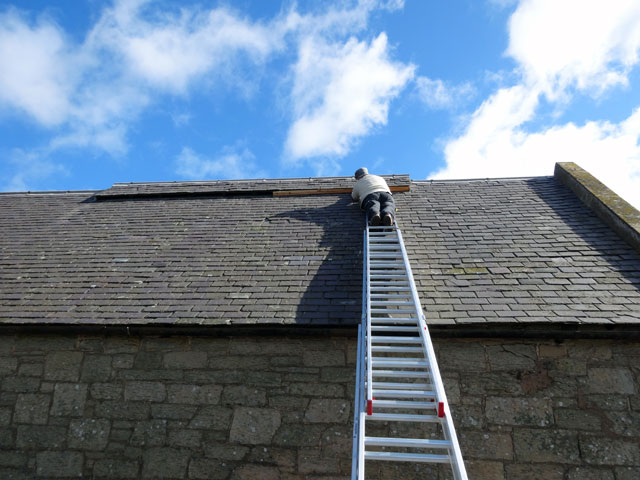
Roof work is inherently dangerous. The Health and Safety Executive (HSE) states that all work on roofs is highly dangerous, even if a job only takes a few minutes, and that proper precautions are needed to control the risk. If you are considering any form of roof access, please keep the following safety guidance firmly in mind. Never work on a roof in wet, windy, or icy conditions. Tiles become extremely slippery when wet, and even experienced professionals avoid roof work in poor weather. Always use a properly secured ladder, placed on firm and level ground, and ideally have someone at the base to steady it. If you need to access the roof surface itself, a roof ladder or crawl board is essential to spread your weight and prevent tile breakage. Wear appropriate personal protective equipment, including non-slip footwear. Avoid stepping directly on the centre of tiles, as this is where they are most likely to crack under pressure. Instead, step on the lower edges where the tile is supported by the one beneath it. Our honest advice is that for anything beyond a quick visual check from ground level or a loft inspection, it is almost always safer and more cost-effective to hire a professional. At Apex Roofing Sussex, we have the equipment, training, and insurance to carry out roof repairs safely and correctly. If you need emergency roof work, we are here to help at short notice.

DIY Temporary Fixes vs Professional Roof Tile Repair

There are some situations where a temporary fix can help limit damage while you wait for a professional repair. For instance, if a storm has cracked a tile and more rain is forecast, applying a waterproof sealant or roofing tape over the crack can provide short-term protection. In more severe cases, a tarpaulin securely fastened over the damaged area can help keep water out until a proper repair can be arranged. However, it is important to understand that these are temporary measures only. Roofing sealants and adhesives can deteriorate quickly when exposed to UV light and changing weather conditions, and they will not address any underlying damage to the underlayment or battens beneath the tile. A permanent repair by a qualified roofer involves a full assessment of the damage, proper removal of the broken tile, inspection and repair of any sub-surface issues, and installation of a correctly matched and fixed replacement tile. This is the only way to ensure your roof remains watertight and structurally sound for the long term. We are not tied to any one type of product or roofing system, so you can trust us to be independent and offer the best advice and products for you and your budget. Get in touch and we aim to provide a quote within 24 hours.

How to Prevent Future Roof Tile Damage With Regular Maintenance

Prevention is always better and cheaper than cure. A regular roof maintenance plan can significantly extend the life of your tiles and help you avoid unexpected repair bills. Here are some practical steps you can take to keep your roof in top condition. Schedule regular roof inspections. We recommend having your roof professionally inspected at least once a year, and always after any significant storm. Early detection of slipped, cracked, or deteriorating tiles can save you a great deal of money in the long run. Keep gutters and downpipes clear. Blocked gutters can cause water to back up under your roof tiles, leading to damp and decay in the fascia and soffit boards. Our gutters, fascias, and soffits service can help keep your entire rainwater system in good working order. Trim overhanging trees. Branches rubbing against tiles or dropping debris onto your roof can cause physical damage and encourage moss growth. Keeping trees trimmed back from your roofline is a simple but highly effective preventative measure. Tackle moss and algae early. Moss retains moisture and can lift tile edges over time, making your roof more vulnerable to wind damage and leaks. Regular cleaning or treatment can prevent this from becoming a serious problem. Check chimney flashing and mortar. Deteriorating flashing around chimneys, vents, and walls is a common source of roof leaks. If you notice crumbling mortar or gaps in the flashing, our chimney repair service can address the issue before it leads to wider damage. Ensure adequate loft ventilation. Poor ventilation can cause condensation to build up in your loft space, which over time can damage the underside of your roof structure and reduce the effectiveness of your insulation.

When to Call a Local Roofing Company in Sussex for Roof Repair

While it is helpful to understand how roof repairs work, the reality is that most roof tile repairs are best left to professionals. You should consider calling a local roofing company if you notice multiple damaged or slipped tiles, if there are signs of water penetration inside your home, if the damage was caused by a storm and may involve structural issues, or if you are simply unsure of the extent of the problem. At Apex Roofing Sussex, we are a family-run business with over 25 years of experience serving homeowners across West and East Sussex, including Worthing, Brighton, Haywards Heath, Eastbourne, Chichester, Hove, and Littlehampton. We pride ourselves on providing honest, transparent advice and reliable workmanship at affordable prices. As one of our valued customers in Worthing shared: “Very professional and friendly. On time, excellent communication with the office, fantastic job. Would highly recommend to anyone and will definitely use them again.” You can read more of what our customers have to say on our testimonials page.

Your Roof Protects Everything Beneath It: Do Not Leave It to Chance

A broken or cracked roof tile might seem like a minor issue, but as we have explored in this guide, the consequences of leaving it unrepaired can be far-reaching. From water damage and mould to structural deterioration, the risks simply are not worth taking when a fix is so readily available. Whether you need a quick repair for a single slipped tile or a comprehensive roof inspection to assess storm damage, the most important thing is to act promptly. Early intervention saves money, protects your property, and gives you lasting peace of mind. Here at Apex Roofing Sussex, we are proud to be a trusted local roofing company offering roof repair services right across Sussex. We bring over 25 years of hands-on experience, a commitment to honest and independent advice, and a friendly, professional approach to every single job.

Frequently Asked Questions About Roof Tile Repair

Q: Can I repair a cracked roof tile myself, or should I call a professional?

For very minor hairline cracks, a temporary application of roofing sealant may provide short-term protection from water ingress. However, for a lasting and safe repair, we would always recommend calling a professional. Roof work carries significant safety risks, and an experienced roofer can also check for hidden damage beneath the tile that simply is not visible from the surface. If you are in Sussex, our team is happy to help with any roof repair needs, large or small.

Q: How urgent is it to fix a broken roof tile?

It is important to address a broken or cracked tile as soon as possible. Even a small crack can allow rainwater to seep through to the underlayment and timber structure below, leading to damp, mould growth, and potentially costly structural repairs. If you notice damage, try to arrange a roof inspection promptly, especially if wet weather is forecast. Our emergency roof work service is available when you need help fast.

Q: What causes roof tiles to crack or break?
The most common causes of roof tile damage include storm and wind damage, freeze-thaw cycles during colder months, accidental foot traffic on the roof, general ageing and weathering, moss growth that lifts tile edges, and poor original installation. In coastal parts of Sussex, such as Worthing and Littlehampton, exposure to strong winds and salt air can also accelerate tile deterioration over time.
Q: Is it safe to walk on a tiled roof?
Walking on roof tiles without proper training and equipment is risky, both for your personal safety and the integrity of the tiles themselves. Tiles can crack under direct pressure, particularly if you step on the centre rather than the supported lower edge. If you must walk on a tiled roof, always use a roof ladder or crawl board and step carefully on the lower portions of the tiles where they overlap. The HSE advises that proper precautions are essential for any work carried out at height on roofs.
Q: How long does a roofing sealant last as a temporary fix?
Most roofing sealants used as a temporary patch on a cracked tile will last anywhere from a few months to a couple of years, depending on the product quality, the severity of the crack, and weather exposure. However, sealants are not a permanent solution for roof tile repair. They can degrade under UV light and fluctuating temperatures, so it is important to follow up with a proper tile replacement as soon as you can.
Q: Does home insurance cover roof tile damage from storms?
In many cases, if your home suffers storm and wind damage, your insurer should cover the cost of the repairs, though coverage will depend on your specific policy and the circumstances of the damage. It is a good idea to document the damage thoroughly with photographs and contact your insurer promptly. The HomeOwners Alliance provides useful guidance on making a storm damage insurance claim. Our storm damage service team can also help you assess and document the damage to support your claim.

Do Not Let a Broken Tile Turn Into a Bigger Problem: Get in Touch Today

If you have spotted a cracked, broken, or slipped roof tile on your property, do not wait for the next downpour to find out how serious it is. Our friendly, experienced team at Apex Roofing Sussex is ready to help with a free, no-obligation quote. Get in touch and we aim to provide a quote within 24 hours. You can reach us by email at info@apexroofingsussex.co.uk or fill out the form on our contact page. Whether you need a simple slipped roof tile repair, a full roof inspection, or emergency storm damage support, we are here for homeowners right across Sussex. We look forward to hearing from you and helping keep your home safe and dry.